Pura Dalem Taman Kaja Kecak Dance Guide
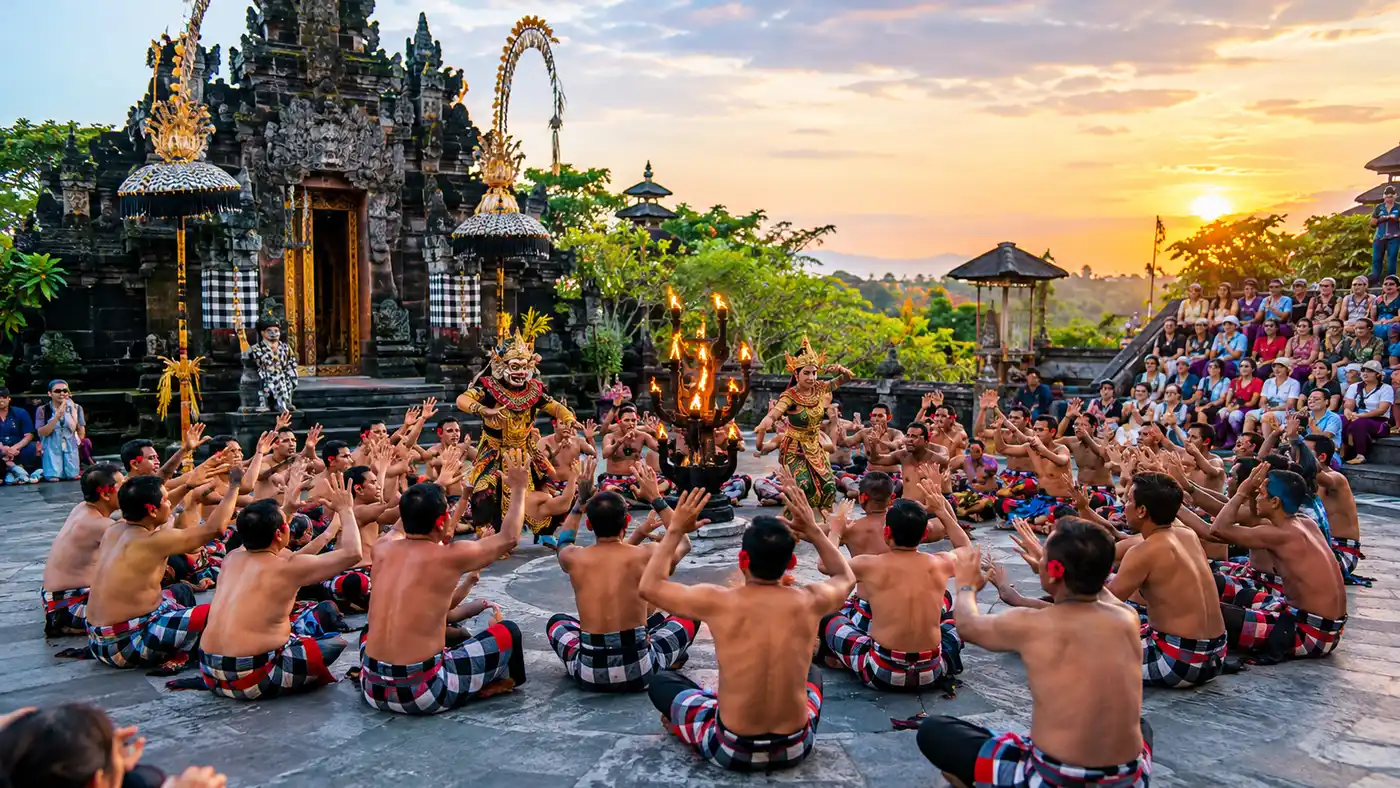
Walking up Jalan Sri Wedari at dusk smells like damp river moss, sweet incense, and clove cigarettes. If you take the ten-minute stroll north from Ubud's chaotic main road, past the quiet laundry kiosks and tucked-away guesthouses, you arrive at pura dalem taman kaja. By day, it looks like many traditional village temples across central Bali, with weathered volcanic stone gates and towering banyan trees. Two nights every week, the outer courtyard transforms into an open-air theater lit solely by a heavy bronze chandelier holding real coconut oil flames.
Ubud offers dozens of cultural performances every evening. You can hardly walk thirty paces down Monkey Forest Road without someone thrusting a laminated show flyer into your hands. Many of those performances feel a bit staged for tour buses, but the kecak fire dance ubud pura dalem show maintains an earthy, village-level energy that sets it apart. This guide walks you through the performance details, ticket buying, exact seating quirks, and how to make the most of an evening here.
Book your kecak dance ubud experience:
What Makes Pura Dalem Ubud Unique for Kecak
Every Balinese village has at least three primary temples. Pura Dalem is the temple of the dead, dedicated to Shiva and Durga, the deities overseeing destruction and transformation. Because of that sacred association, these spaces carry a heavier, more reverent atmosphere than ordinary meeting pavilions. The stone carvings flanking the split gate (candi bentar) at Pura Dalem Ubud depict demons, underworld guardians, and mythical beasts with bulging eyes and fangs. When the sun drops behind the palms and twilight turns violet, these carved stone figures catch shadows from the torches, giving the whole venue a supernatural backdrop.
The troupe here is composed of local villagers from the Taman Kaja community banjar. Rather than hiring freelance dancers from outside districts, the neighborhood youth, fathers, and grandfathers form the sixty-man vocal choir. The women and teenagers play the central characters from the Ramayana epic. You can see the pride they take in doing this for their own neighborhood sanctuary.
Note: Because this is an active community temple, performances are occasionally cancelled or relocated without much notice when major temple ceremonies or village funerals take place.
The space itself is compact. Unlike the massive open amphitheater down in Uluwatu where thousands of visitors peer down from concrete bleachers, the kecak dance pura dalem taman kaja seats perhaps 180 people. You sit barely three feet away from the outer ring of chanting men. You feel the vibration of their voices in your sternum, and you will definitely get small flecks of ash on your bare shins during the fire dance.
Jadwal Kecak Fire Dance Ubud Pura Dalem and Venue Comparisons
Showtimes in Bali can confuse newcomers because each village temple coordinates its own schedule. If you are tracking down the jadwal kecak fire dance ubud pura dalem, the regular shows run twice weekly, on Wednesday and Saturday evenings at 19:30. The gate generally opens around 18:45, and the performance runs for about 65 minutes. It is smart to consult a broader Ubud Kecak dance schedule if your travel dates do not line up with those two days, since other temples host their shows on alternate nights.
To help you weigh your options against other cultural dance spots nearby, here is how the Taman Kaja performance compares to alternative venues around town:
| Venue | Show Days | Start Time | Ticket Price | Setting |
|---|---|---|---|---|
| Pura Dalem Taman Kaja | Wednesday, Saturday | 19:30 | 100,000 IDR | Intimate village death temple courtyard |
| Ubud Royal Palace | Daily (rotating dances) | 19:30 | 100,000 IDR | Historic palace pavilion, very crowded |
| Padangtegal Kaja (Trenggana) | Thursday | 19:00 | 100,000 IDR | Spacious neighborhood temple stage |
| Pura Dalem Puri (Peliatan) | Sunday | 19:30 | 100,000 IDR | Broad open pavilion, traditional troupe |
The timing here fits neatly into an Ubud evening. You can finish an early dinner along Jalan Sri Wedari, wander over to the temple by 19:00, catch the full show, and still have time for a ginger tea or dessert before shops shut down around 21:30.
The Performance: Chants, Monkey Armies, and Sacred Fire
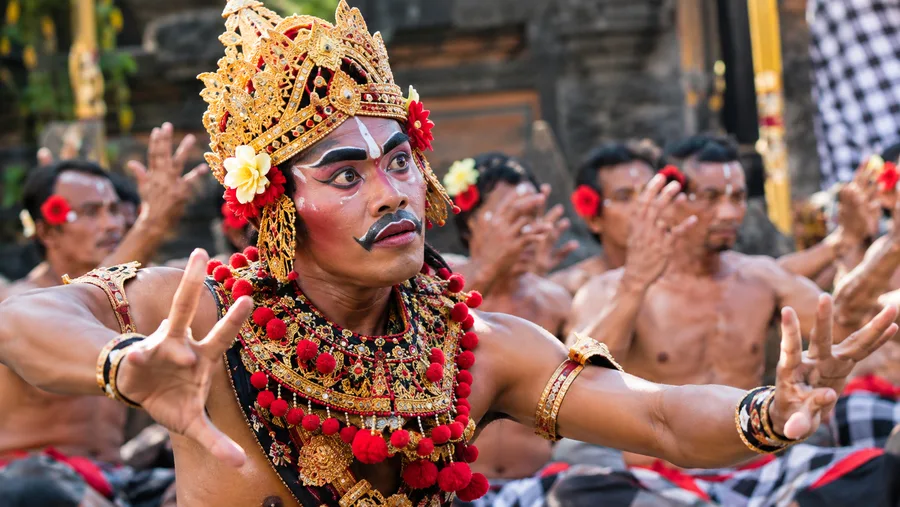
The show starts with no musical instruments whatsoever. If you have only heard gamelan music with its bronze gongs and fast metallophones, Kecak comes as a shock. The men file in quietly, wearing black-and-white checkered sarongs (kain poleng) tied around their waists, bare-chested with red hibiscus flowers tucked behind their ears. They sit in tight concentric circles around a tall oil-flame candelabra.
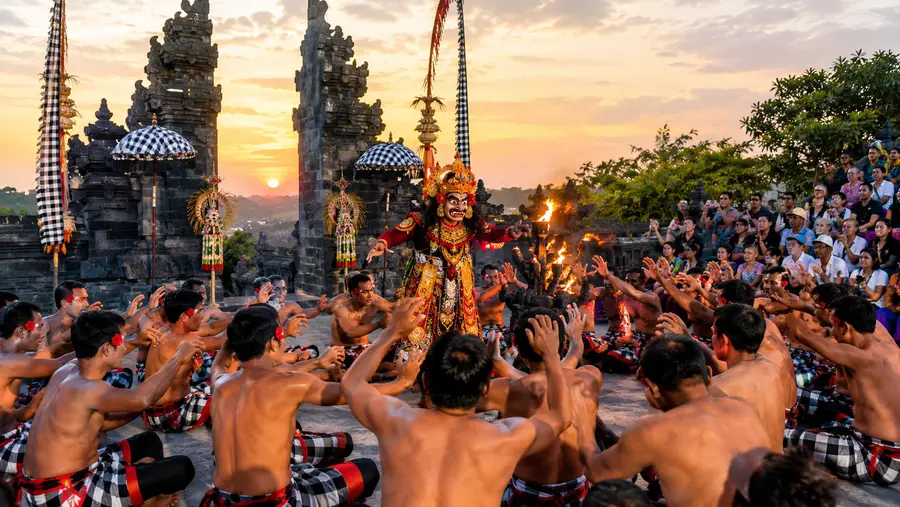
Then someone lets out a sharp, piercing vocal cue. The circle erupts into rhythmic, polyrhythmic syllables: "Cak-cak-cak-ke-cak." The sound moves in waves. One side of the circle pushes the tempo faster, while the other holds a low, steady drone. Sixty throats working together sound surprisingly like a field of cicadas or an army of frogs after monsoon rain. The men throw their arms skyward, rock their torsos side to side, and fall flat onto the flagstones in synchronized waves.
Through this human wall of sound, the Ramayana drama unfolds. Prince Rama, his wife Sita, and his loyal brother Lakshmana are wandering in exile. The golden deer appears, which Sita begs Rama to capture. While the brothers are lured away, the demon king Rahwana swoops in to kidnap Sita. The choreography feels theatrical, punctuated by comedic interludes from the monkey general Hanuman, who routinely bounds into the audience to tease unsuspecting spectators.
Pro tip: Sit on the perimeter chairs rather than the front row floor mats if you prefer not being pulled into the acting area by Hanuman during his playful crowd-teasing scene.
The climax of the pura dalem ubud kecak dance shifts abruptly into the Sanghyang Jaran trance dance. A village performer enters riding a carved wooden hobby horse. Attendants dump dry coconut husks into the middle of the stone floor and ignite them into a roaring bonfire. Once the embers are glowing crimson, the rider gallops barefoot straight through the coals, kicking sparks high into the humid night air. The smell of scorched coconut shell hangs thick over the temple steps for hours afterward.
Book your kecak dance ubud experience:
Tickets, Seating Hacks, and Venue Logistics
Tickets for the pura dalem ubud performance cost 100,000 IDR per person, which works out to roughly $6.50. You can buy them directly at the small table set up outside the temple gate starting around 18:00 on performance nights. You might also encounter local village sellers walking down Jalan Sri Wedari in the afternoon offering tickets. They charge the exact same price as the gate, and buying from them supports the banjar fund directly, so there is no harm in picking one up early.
Getting a decent seat requires a little planning, especially during the dry season from July through September when Ubud fills up. Here are a few practical rules for finding the best spot:
- Arrive 35 minutes early: Walking through the gates at 18:55 gives you first choice among the elevated perimeter chairs before the bulk of the crowd shows up.
- Skip the front floor mats: The organizers lay woven mats right on the ground around the choir circle. They seem appealing, but your back will ache after forty minutes without back support, and your view is actually flatter.
- Aim for the temple gate background: Pick a seat facing the inner stone gate so your photos catch the dancers framed against the ancient moss-covered masonry instead of the plastic folding chairs on the opposite side.
- Keep your knees clear of the kick zone: When the fire dancer begins scattering the coals at the end, workers use small palm brooms to push stray embers back into the center, but sitting in the very front row means you will feel real heat on your feet.
Rain is always a factor in central Bali. If an evening thunderstorm rolls in, the village organizers quickly shift the seating into the covered pavilion (wantilan) adjacent to the main shrine. The show goes on regardless, though the echoes inside the roofed pavilion make the chanting twice as loud.
Practical Tips: Dress Code, Photography, and What to Do After
Because the performance happens in the outer courtyard (jaba pisan) rather than the inner sanctum of Pura Dalem Ubud, you do not need full ceremonial temple dress. You will see people wearing shorts and casual shirts. That said, keeping your shoulders covered and wearing something that reaches past the knee is a polite nod to the elders managing the gate. Sarongs are not strictly required for audience members here, but wrapping one around your waist never hurts.
Photography is completely permitted, though flashing strobes ruin the atmosphere for everyone sitting near you. The natural torchlight is dim, so if you are using an actual camera, bump your ISO up to at least 3200 and set a wide aperture like f/2.8 or f/1.8. Smart phones usually do a decent job with night mode, provided you hold your hands steady during the faster dance movements.
- Bring small cash bills: The ticket desk does not take credit cards or digital transfers, so carry an exact 100,000 IDR note for each ticket to keep the entry line moving quickly.
- Walk rather than drive: Jalan Sri Wedari is narrow, poorly lit, and lacks car parking. If you are staying around central Ubud, walk on foot or take a short scooter ride.
- Grab dinner on Sri Wedari: Several laid-back local warungs sit within a three-minute stroll of the gate. Warung Biah Biah is right down the road for Balinese small plates, or you can grab a bowl of hot noodle soup at Warung Garasi just around the corner.
If you are trying to decide between different village shows across town, reading up on where to watch Kecak dance in Ubud will give you a sense of how the atmosphere here differs from places like Junjungan or Batubulan.
Frequently Asked Questions about pura dalem taman kaja
How much do tickets cost for the pura dalem ubud kecak dance?
Tickets cost 100,000 IDR per person for adults. You pay with cash at the entrance gate table or buy in advance from community members along Jalan Sri Wedari on the afternoon of the show.
What days does the kecak fire dance ubud pura dalem run?
The standard schedule runs every Wednesday and Saturday evening starting promptly at 19:30. The gate opens around 18:45, and seating is first come, first served.
Do I need to wear a sarong to watch the show?
No, a traditional sarong and temple sash are not mandatory since the performance takes place in the outer courtyard. Dressing modestly with covered shoulders and longer shorts or skirts is appreciated by the temple elders.
Can children watch the fire dance at Pura Dalem Taman Kaja?
Yes, children usually love the monkey movements and energetic chanting. Just keep young kids off the floor during the final fifteen minutes when red-hot coconut embers are being kicked around the courtyard.
Quick Reference
- Show Days: Wednesday and Saturday
- Start Time: 19:30 (doors open 18:45)
- Ticket Price: 100,000 IDR cash
- Location: Jalan Sri Wedari, Taman Kaja, Ubud
- Performance Length: Approximately 65 minutes
Book your kecak dance ubud experience:
Is It Worth It?
If you only have time to watch one traditional performance during your stay in Ubud, this one delivers on every count. It lacks the slick tourist-bus polish of commercial cultural centers, and that is precisely why it works. You sit shoulder to shoulder with other travelers on wooden benches, breathing in sweet clove smoke and hearing the unamplified roar of sixty Balinese men chanting in the dark. Head up Jalan Sri Wedari around sunset, grab a quiet bowl of soto ayam down the lane, and make an evening of it.
Read more about kecak dance ubud.